
Most new store owners treat the “About Us” page as a chore. They write a few lines about “quality products” and “excellent customer service” and call it a day. But if you look at the heatmaps and analytics for successful small businesses, the About Us page is frequently the second or third most-visited page on the site. When a customer doesn’t know your brand, they aren’t just looking at your products; they are looking for a reason to trust you with their credit card information.
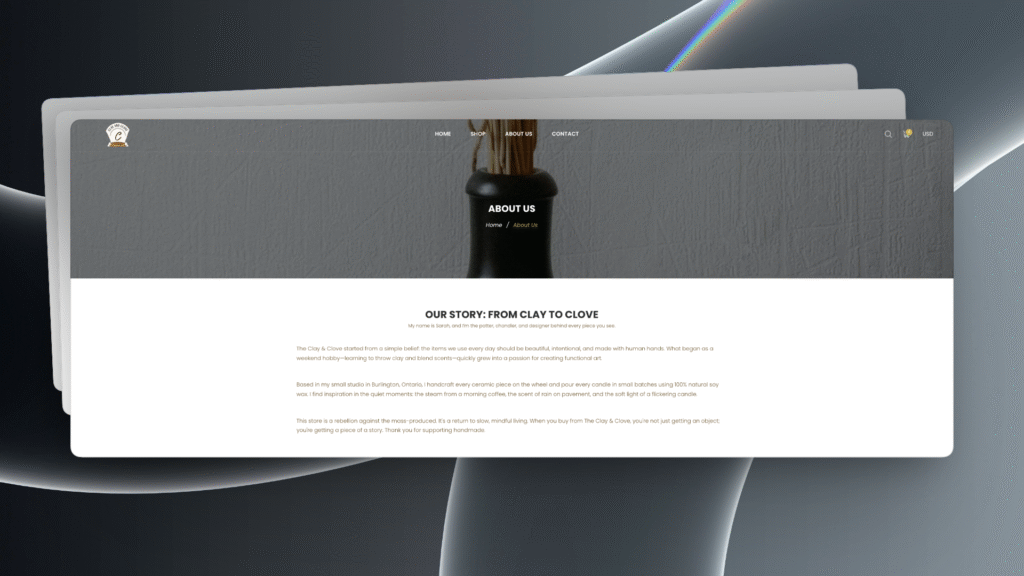
The Psychology of E-commerce Trust
In a digital environment where you can’t shake a customer’s hand, trust is built through transparency and shared values. According to the Social Identity Theory, consumers are more likely to support brands that reflect their own identity or solve a problem they personally recognize. This isn’t just marketing theory—it’s a survival mechanism for online shoppers.
When a visitor clicks your About page, they are performing a risk assessment. They want to know if there is a real person behind the screen. Using E2C’s customization tools allows you to move past the “generic store” look that often triggers red flags for savvy shoppers. A template that looks exactly like a thousand other dropshipping sites creates a cognitive dissonance that leads to high bounce rates. By personalizing the layout and adding unique brand elements, you signal that you are an established, reliable entity.
The Anatomy of a High-Converting Story
Effective storytelling in e-commerce isn’t about writing a memoir. It’s about positioning your brand as the solution to a specific challenge. Research into narrative transport suggests that when people are engaged in a story, they are less likely to experience “counter-arguing”—which, in sales terms, means they are less likely to find reasons not to buy.
The Founder’s Journey: From Problem to Platform
Instead of listing facts, try the Problem-Agitation-Solution framework. Why did you start this business? Most successful E2C sellers started because they couldn’t find a specific product or were frustrated with the current market options.
- The Problem: Identify the gap you saw in the market.
- The Agitation: Explain why that gap was a frustration for you and others.
- The Solution: Introduce your store as the bridge that fixes that problem.
This structure creates an immediate connection. You aren’t just a shop; you’re a peer who understands the customer’s needs. This builds a “Halo Effect,” where the positive feelings generated by your story transfer directly to your products.
Using E2C Tools to Break the Template Mold
One of the biggest mistakes is leaving the default “About Us” layout untouched. To build a global brand, you need to use the full range of customizable storefront features available on E2C.
First, consider the visual hierarchy. People don’t read web pages; they scan them. Use bold headings and varied font sizes to highlight your core mission.
Authentic photography is non-negotiable here. Studies show that images of real people—especially the founders or the team—increase conversion rates significantly more than stock photos. If you’re a maker, show your workspace. If you’re a curator, show the process of how you select items. These “behind-the-scenes” glimpses act as powerful trust signals that a generic template simply can’t provide.
Visual Trust Signals: More Than Just a Logo
Your color palette and typography do more than just look pretty; they communicate your brand’s personality before a single word is read. E2C’s platform gives you the flexibility to align these elements with your brand’s voice.
- Vibrant colors (like our signature orange) can signal energy and innovation.
- Soft, muted tones often convey reliability and calm.
- Clean, minimalist layouts suggest efficiency and professionalism.
When your visual design matches the tone of your writing, it creates a cohesive experience. Inconsistency is a trust-killer. If your About page sounds friendly but looks like a rigid corporate document, the customer feels an instinctive sense of unease. Use the E2C editor to ensure your brand’s “vibe” is consistent across every touchpoint.
Turning Storytelling into Data-Driven Growth
At the end of the day, your About Us page should serve a functional purpose: moving the customer closer to a purchase. While the page is educational, it should never be a dead end.
Every About page needs a clear, organic transition back to your products. This could be a “Founder’s Favorites” collection or a simple link to your newest arrivals. By monitoring your analytics within the E2C dashboard, you can see which sections of your story keep people on the page and which lead to conversions.
Building a brand is a marathon, not a sprint. By using your About page to establish a human connection, you’re not just making a sale today—you’re building the foundation for a long-term relationship with your customers. It’s about being accessible, being real, and showing the world that your business is more than just a checkout button.
Read about Harnessing Analytics to Boost Your Online Sales with E2C Store next.

Leave a Reply